

7 Adaptogens for Stress Relief That Actually Work
Stress isn't just a feeling. It's a physical process - your body releasing cortisol, your nervous system staying on high alert, your sleep and energy paying the price. Most quick fixes address the symptom without touching the cause. Adaptogens work differently. These plant-based compounds help regulate your body's stress response at the hormonal level, building resilience over time rather than masking the problem temporarily. Here are seven adaptogens with real research behind them, what they actually do, and how to use them correctly.
What Are Adaptogens and How Do They Work
Before getting into the list, it's worth being clear about what an adaptogen actually is - because the word gets thrown around loosely.
Adaptogens are herbs and fungi that help your body maintain homeostasis under stress. They work primarily through the hypothalamic-pituitary-adrenal (HPA) axis, the system that regulates cortisol and your overall stress response. Rather than sedating you or forcing artificial energy, they help your body handle pressure more efficiently.
The research base varies across different herbs. Some have robust clinical trials behind them. Others have strong traditional use and early-stage human studies. This list sticks to ones with meaningful evidence in both categories. It's also worth noting that L-Theanine - included here - is technically an amino acid found in tea leaves rather than a plant adaptogen in the traditional definition, but its stress-modulating effects are well-documented and it belongs in any honest discussion of the topic.
1. Ashwagandha - For Anxiety and Sleep
Ashwagandha is the most clinically studied adaptogen for stress. A 2019 randomized controlled trial published in Medicine found that 240mg of KSM-66 ashwagandha extract daily reduced cortisol by around 23% over 60 days. Other studies using higher doses show reductions up to 28%, though results vary by extract type and individual baseline.
Best for: Anxiety, racing thoughts, stress-related insomnia, feeling "wired but tired"
Typical dosage: 300–600mg of a root extract standardized to withanolides, taken in the evening
Timeline: Improved sleep often noticed within two weeks; cortisol and anxiety effects build over four to eight weeks
Important note: Extract quality matters significantly here. KSM-66 and Sensoril are the two most studied forms. Generic root powder at low doses is unlikely to produce the same results. You can explore ashwagandha tinctures and their differences compared to Reishi if you're deciding between the two.
2. Rhodiola Rosea - For Fatigue and Mental Clarity
Rhodiola is the adaptation for stress that shows up as exhaustion rather than anxiety. Where ashwagandha calms, Rhodiola energizes - it works by modulating dopamine and serotonin activity and reducing the breakdown of feel-good neurotransmitters during high-pressure periods.
Best for: Mental fatigue, stress-related burnout, low motivation, afternoon energy crashes
Typical dosage: 200–400mg of an extract standardized to 3% rosavins and 1% salidroside, taken in the morning on an empty stomach
Timeline: Most people notice sharper thinking and reduced fatigue within one to two weeks
Note: Take Rhodiola in the morning or early afternoon only. Unlike ashwagandha, it has mild stimulating properties and can interfere with sleep if taken too late in the day.
3. Tulsi (Holy Basil) - For Daily Stress and Immunity
Tulsi has been used in Ayurvedic medicine for thousands of years and holds up reasonably well under modern scrutiny. It works on both the HPA axis and the immune system simultaneously, which makes it useful for people whose chronic stress has started affecting their physical health - frequent colds, slow recovery, persistent fatigue.
Best for: Everyday stress management, immune support, mental clarity without stimulation
Typical dosage: 300–600mg of dried leaf extract daily, or 1–2 cups of Tulsi tea
Timeline: Improved focus often noticeable within one week; anxiety reduction builds over three to four weeks
Tulsi is gentle enough for daily use indefinitely and pairs well with other adaptogens. It appears in several functional tea and tonic blends precisely because it complements rather than competes with other herbs.
4. American Ginseng vs. Asian (Panax) Ginseng - Know the Difference
These two are frequently lumped together, but they have meaningfully different effects and deserve separate consideration.
American Ginseng (Panax quinquefolius) is calming and cooling. It's better suited for people who feel depleted, overheated, or anxious. It's the better choice for stress-related fatigue without adding stimulation.
Asian (Panax) Ginseng (Panax ginseng) is warming and more energizing. It supports physical stamina, improves how cells use glucose for energy, and is particularly useful for physical stress, post-illness recovery, and hormonal balance in men.
Typical dosage: 200–400mg of a standardized extract for either variety
Timeline: Energy improvement within one week; mood and hormonal benefits over two to three weeks
If you're dealing with anxiety alongside fatigue, American Ginseng is the safer starting point. If you're primarily depleted and physically run-down, Asian Ginseng is worth considering - though it's best avoided in the evenings.
5. L-Theanine - For Calm Focus Without Sedation
L-Theanine is an amino acid found naturally in green tea and matcha. It's not a traditional plant adaptogen, but its effects on stress are well-documented: it increases GABA, serotonin, and dopamine activity while reducing excitatory neurotransmitters that keep your brain in overdrive.
Best for: Stress-related mood swings, anxious energy, the jittery side effects of caffeine, situational stress before presentations or difficult conversations
Typical dosage: 100–200mg, standalone or combined with caffeine at a 2:1 L-Theanine to caffeine ratio
Timeline: Effects on anxiety and focus are noticeable within 30 to 60 minutes; cumulative mood benefits build over four weeks with consistent use
This is the one adaptation on this list where you'll feel something quickly. It's a useful option when you need support the same day, not four weeks from now.
6. Lion's Mane Mushroom - For Cognitive Stress
Lion's Mane is often marketed for immediate focus - some brands claim effects within an hour. The reality is more nuanced. Research does support cognitive benefits, but the most meaningful results come from consistent use over several weeks, not a single dose.
What Lion's Mane does well is support the brain's long-term resilience to stress. It stimulates nerve growth factor (NGF), which helps neurons repair and regenerate - damage that accumulates during prolonged high-stress periods. A 2023 review found cognitive benefits were strongest in adults over 40 taking at least 3 grams daily for three or more months.
Best for: Stress-related brain fog, cognitive decline concern, mental performance under pressure
Typical dosage: 500mg–3g of a dual-extracted supplement (both hot water and alcohol extraction, for full-spectrum bioactive compounds), daily
Timeline: Subtle clarity improvements in two to four weeks; meaningful neuroprotective effects over three or more months of consistent use
You can explore Lion's Mane alongside other herbal tinctures to see how it fits into a broader adaptogen protocol.
7. Reishi Mushroom - For Sleep and Long-Term Immunity
Reishi is the slowest-acting adaptogen on this list, but it's among the most valuable for long-term use. Its primary strengths are immune modulation and sleep quality - both of which deteriorate significantly under chronic stress.
Best for: Stress that disrupts sleep, chronic inflammation, immune weakness, long-term wellness foundation
Typical dosage: 1–2g of a dual-extracted Reishi supplement, or as directed in a formulated blend, taken in the evening
Timeline: Sleep improvements often within two weeks; immune and cortisol-related benefits over four to six weeks
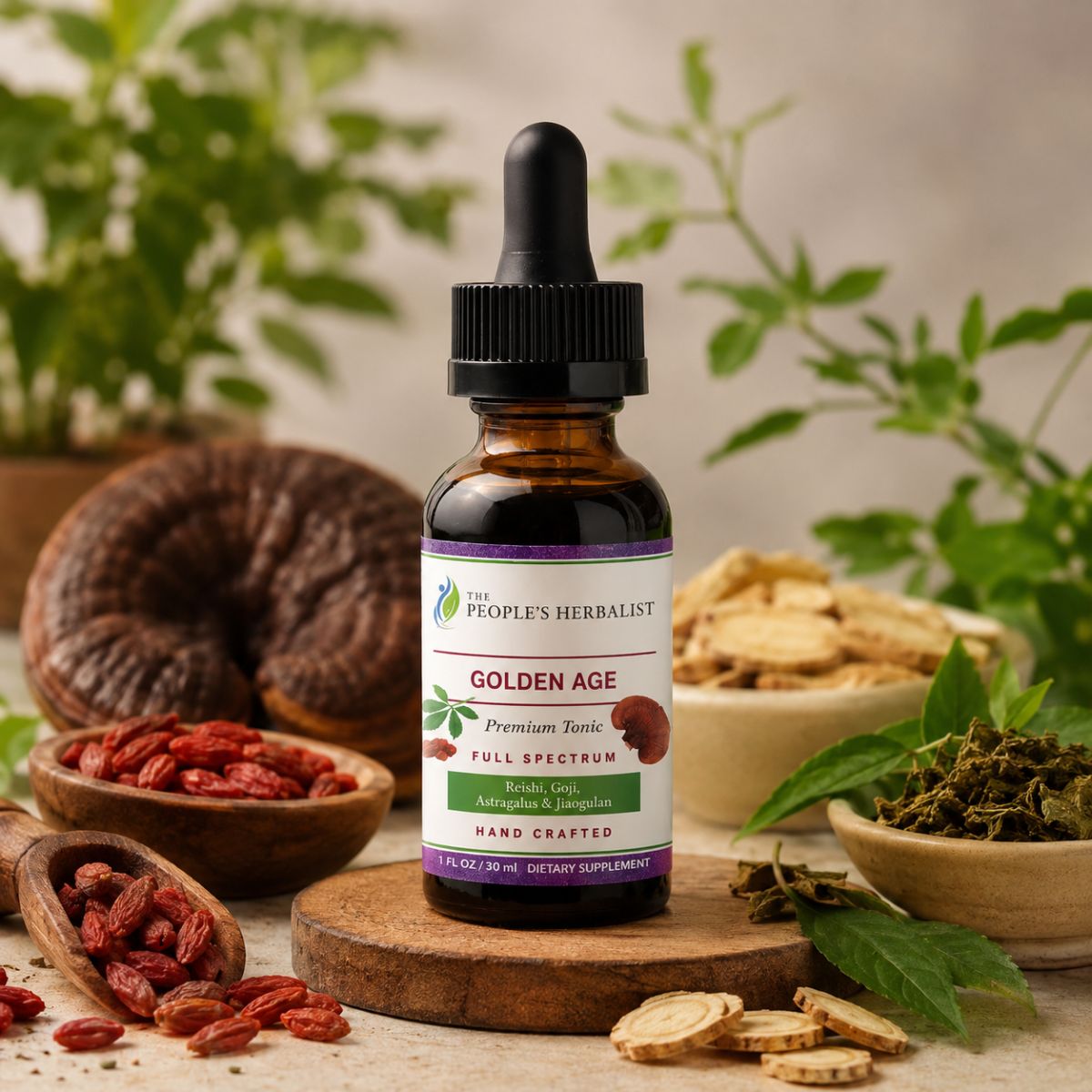
Reishi pairs particularly well with ashwagandha in evening routines - both work on GABA pathways and complement each other without overlap. The Golden Age Tonic includes Reishi as a core ingredient alongside Astragalus and Jiaogulan for anyone looking for a formulated longevity-focused option.
How to Use Adaptogens Without Wasting Your Time
A few practical rules that make the difference between seeing results and wondering why nothing happened:
Take with food and fat. Most adaptogens are fat-soluble or absorb better alongside a meal. Morning with breakfast or dinner both work well.
Cycle them. Take adaptogens consistently for 10 to 12 weeks, then take a two to four week break. This prevents your receptors from adapting and your results from plateauing.
Track one thing. Pick a single metric - sleep quality, anxiety score, afternoon energy - and note it weekly. Adaptogens work gradually and the changes are easy to miss without a reference point.
Don't judge results at week one. Most people start noticing changes around week three. The full effect takes eight to twelve weeks. If you quit at week two, you haven't actually tried it.
Talk to your doctor first if you're on medications for blood pressure, thyroid, diabetes, or immune conditions. Several adaptogens - particularly Ashwagandha and Asian Ginseng - have documented interactions with these drug classes.
The Bottom Line
Adaptogens aren't a shortcut. They're a sustained investment in how your body handles stress - one that pays off slowly and consistently. The herbs on this list have the best combination of traditional use and clinical support available. But they work only if you take them correctly, give them enough time, and choose quality extracts rather than underdosed powders.
The People's Herbalist carries a full range of adaptogen tinctures, tonics, and functional blends - all formulated for bioavailability and real-world use. If you're not sure where to start, the herb catalog breaks down each adaptogen individually so you can match the herb to your specific stress pattern rather than guessing.
Start with one. Track it honestly. Give it twelve weeks.
Frequently Asked Questions
1. What is the fastest-acting adaptogen for stress relief?
L-Theanine works within 30 to 60 minutes and is the best option for same-day stress support. Rhodiola improves mental clarity within a few days of consistent use. Most other adaptogens on this list require three to eight weeks of regular use before producing noticeable cortisol and mood changes.
2. Can I take multiple adaptogens at the same time?
Yes, many adaptogens complement each other well. Ashwagandha and Rhodiola are a common pairing - one for evening calm, one for morning energy. Start with a single adaptogen for two to three weeks before adding another, so you can clearly identify what's working and what isn't.
3. What is the difference between American and Asian Ginseng?
American Ginseng is cooling and calming - better for anxious fatigue. Asian (Panax) Ginseng is warming and stimulating - better for physical depletion and stamina. They should not be used interchangeably. Your stress pattern, not just the word "ginseng," should guide which one you choose.
4. Do adaptogens have side effects or drug interactions?
Most adaptogens are well-tolerated at recommended doses. However, Ashwagandha and Asian Ginseng can interact with blood pressure medications, thyroid drugs, and immunosuppressants. Rhodiola may cause mild restlessness if taken too late in the day. Always consult a healthcare provider before starting if you take prescription medications.
5. How do I know if an adaptogen supplement is high quality?
Look for standardized extracts rather than raw powder - for example, KSM-66 or Sensoril for Ashwagandha, or dual-extracted (hot water and alcohol) for mushroom adaptogens like Lion's Mane and Reishi. Check that the supplement lists the extract ratio and the active compounds being standardized. Generic "500mg root powder" with no standardization is rarely effective.